
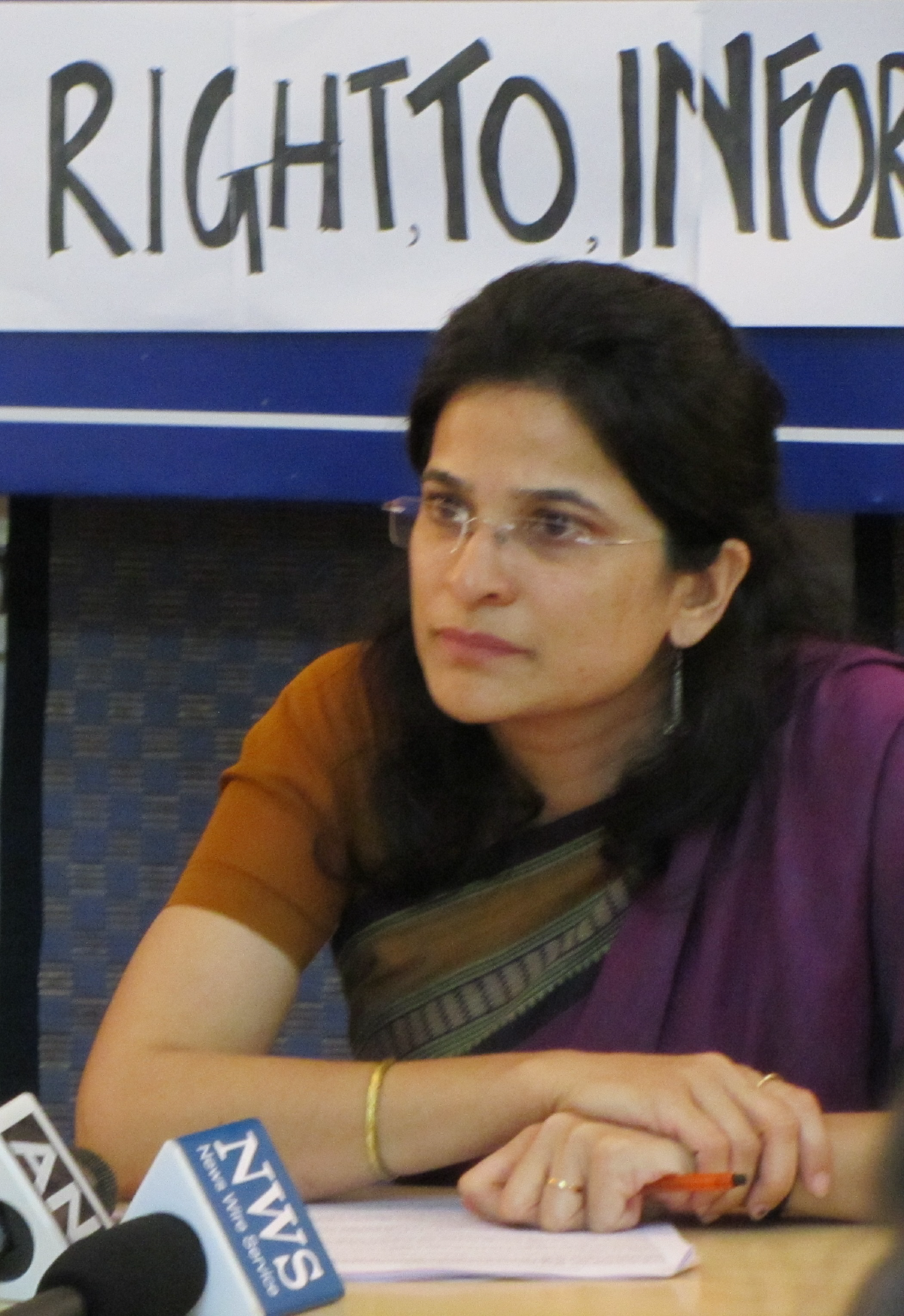

🧑⚖️ Who is Anjali Bhardwaj?#
Anjali Bhardwaj is a prominent Indian social activist focused on transparency, accountability, and citizens’ right to information. Born in 1973, she has been a vocal voice in India’s civic space, campaigning for effective implementation of the Right to Information Act (RTI), 2005 and related governance reforms such as whistleblower protection, grievance redress, and anti-corruption measures. :contentReference[oaicite:0]{index=0}
📌 Follow her on X/Twitter: https://x.com/AnjaliB_
She is also featured in numerous media, talks, and interviews via her YouTube channel: https://www.youtube.com/@anjalibhardwaj1933/videos
🏛️ Educational & Professional Background#
Anjali completed her BA at Lady Shri Ram College (Delhi University) and later pursued higher studies overseas, including an MSc from the University of Oxford and a master’s from the Delhi School of Economics. :contentReference[oaicite:1]{index=1}
Her academic grounding deepened her engagement with causes of social justice and governance reform, shaping her future advocacy work.
🤝 Satark Nagrik Sangathan (SNS)#
Anjali is the founder of Satark Nagrik Sangathan (SNS) — a civil society group based in New Delhi that empowers citizens by using the RTI Act to enhance government accountability, improve public services, and build vigilant citizenship. :contentReference[oaicite:2]{index=2}
👉 Contact SNS India: https://www.snsindia.org/contact/
Satark Nagrik Sangathan collaborates with citizens nationwide, publishes report cards on legislators, and conducts campaigns that hold institutions accountable. :contentReference[oaicite:3]{index=3}
📢 Key Contributions#
✔️ Right to Information Movement#
Anjali has been at the forefront of the RTI movement in India since the late 1990s, working on grassroots awareness as well as legal reform. :contentReference[oaicite:4]{index=4}
Her work spans multiple laws and initiatives, including:
- The RTI Act, 2005
- Whistle Blowers Protection Act, 2011
- Lokpal and Lokayuktas Act, 2013
- Grievance redress mechanisms. :contentReference[oaicite:5]{index=5}
✔️ Landmark Legal Advocacy#
Anjali was a petitioner in several Supreme Court cases advocating effective functioning of the RTI regime, especially on transparency in appointments to the Central and State Information Commissions. :contentReference[oaicite:6]{index=6}
These petitions emphasized the importance of timely appointments of information commissioners as essential to realizing citizens’ rights under the law. :contentReference[oaicite:7]{index=7}
🏆 Awards & Recognition#
Her leadership in transparency and accountability has earned her several honours:
- International Anti-Corruption Champions Award by the US Department of State, recognizing her as one of 12 global leaders in anti-corruption activism. :contentReference[oaicite:8]{index=8}
Anjali often credits such recognition to the collective efforts of the larger transparency movement. :contentReference[oaicite:9]{index=9}
▶️ Talks, Interviews & Videos#
Below are some curated videos of Anjali Bhardwaj discussing various aspects of RTI, governance, and citizen rights:
🎥 Watch her in action:
- https://youtu.be/Ksz4Cq5BQ6s?si=9S12qtjhYg157LJJ
- https://youtu.be/Q7snMhUSJUs?si=OjAu9HwZb3k6QdaP
- https://www.youtube.com/live/1Nm47z3dbRU?si=dPjl4gARhsKvImbO
- https://youtu.be/xOlkKje5TVs?si=hbliMLSQRB3yFZvd
- https://youtu.be/J7SppqqwBmA?si=ub9J-1dWs7rPAERV
These videos cover her talks at events, live discussions, and public forums where she articulates critical issues around transparency, citizen engagement, and governance reforms.
📌 In Her Own Words#
Across her writings and speeches, Anjali stresses that information and transparency are foundational to democratic accountability. She highlights that only an informed citizenry can effectively engage with public institutions and challenge corruption or inefficiency.
🧠 Final Thoughts#
Anjali Bhardwaj stands as one of India’s most influential voices for RTI and transparency. From grassroots mobilization to high-level legal advocacy, her work with Satark Nagrik Sangathan (SNS) and broader civil society networks continues to shape conversations on governance and citizen empowerment in India.